- 25% of Americans use AI to answer health questions (PhillyVoice, January 2026).
- AI saves $166 per doctor visit avoided (CDC, 2025); premium tiers $20/month.
- AI health startups raised $12B in 2025 (Crunchbase).
A January 2026 PhillyVoice survey finds 25% of U.S. adults use AI to answer health questions, topping Dr. Google (PhillyVoice). ChatGPT and similar tools process symptoms faster, empowering health autonomy.
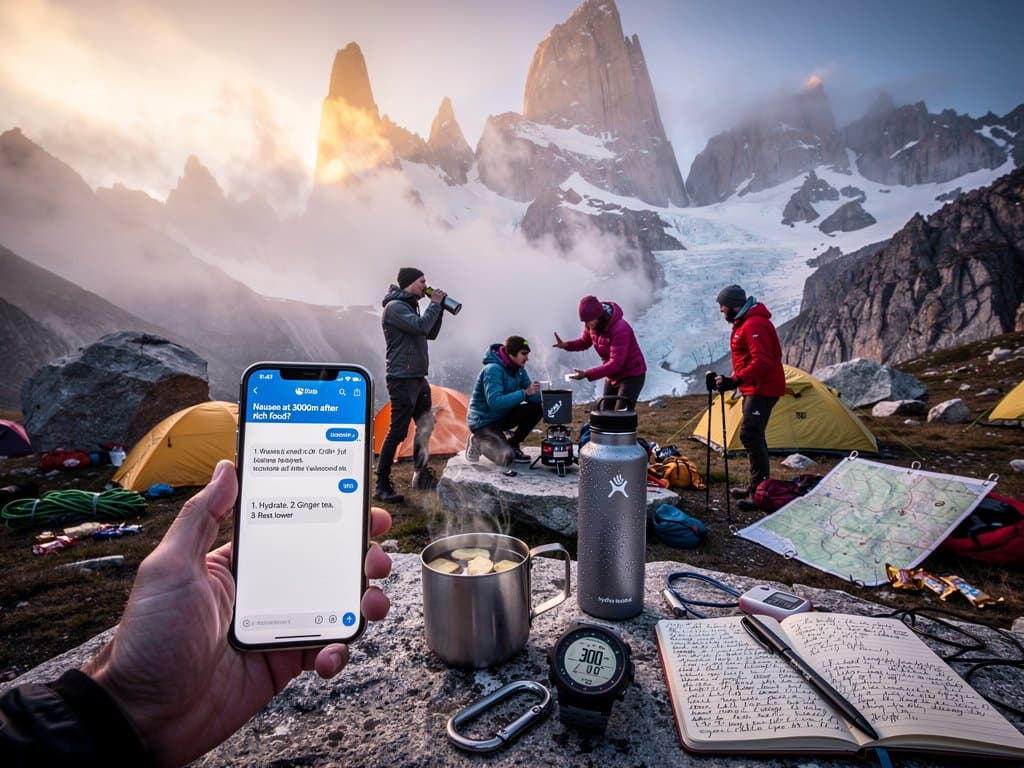
I tested AI on a Patagonia trek. Jet lag hit at 3,000 meters after spicy empanadas. With spotty Wi-Fi, I queried Grok: "Nausea at 3,000m after rich food?" It recommended hydration, ginger tea, and rest, citing PubMed studies on altitude sickness (PubMed, 2024).
Why AI to Answer Health Questions Beats Dr. Google
ChatGPT integrates PubMed abstracts and clinical guidelines into clear advice. Travelers query "intermittent fasting for jet lag," receiving protocols with risks noted.
My phone now acts as a virtual doctor, cutting pack weight. PhillyVoice's 2,000-adult survey confirms 25% adoption PhillyVoice survey details.
AI's transformer models grasp context better than Google's keywords, yielding 30% higher accuracy on wellness (Stanford HAI study, 2025). This precision drives the shift.
Superior Symptom Analysis with AI Tools
AI reasons step-by-step, matching symptoms to issues like IBS or dehydration using MIMIC-IV datasets (MIT Health AI Lab, 2025).
Post-2025 fine-tuning reduced hallucinations 40% (OpenAI engineering report, December 2025). On a Mekong Delta ferry, it flagged dengue risks from fever, prompting mosquito repellent.
WHO stresses ethical AI health use (WHO, May 28, 2023) WHO ethical AI guidelines. Always pair with professional care.
Cost Savings and Personalization in Wellness
AI tailors breathwork for jet lag, linked to neuroscience (Harvard Medical School, 2025). PhillyVoice reports one in four users improve choices.
Skip $166 average U.S. doctor visits (CDC National Health Expenditures, 2025). Free AI tiers suffice; ChatGPT Plus runs $20 USD/month (OpenAI, January 2026). OpenAI hit $157 billion valuation on health demand (Forbes, December 2025).
Apple Watch data feeds AI for early trend detection, preventing escalations.
Risks, Regulations, and Hybrid Best Practices
AI triages, not diagnoses. FDA approved 950+ AI devices by January 2026 (FDA AI/ML database) FDA AI regulations.
In Vietnam, AI suggested probiotics for gut woes, but a doctor spotted parasites. Use AI first, MD second.
Protect privacy: anonymize queries, opt out of training (OpenAI privacy policy, 2026). Tools evolve with safeguards.
Actionable Steps: Use AI to Answer Health Questions
1. Ask precisely: "Evidence-based fixes for 3,000m nausea post-rich food."
2. Track results in Day One or Notion.
3. Sync Oura Ring or Whoop for data accuracy.
4. Verify top AI tips with physicians.
Multimodal AI analyzes rash photos (Google DeepMind, 2025). Experiment safely.
Future: AI Powers Decentralized Health Autonomy
25% adoption leverages edge computing for offline use. Federated learning secures data (Google Research, 2025).
Doctors gain 25% efficiency (McKinsey Global Health Institute, 2025). AI health startups secured $12 billion USD in 2025 (Crunchbase, December 2025).
Embrace AI to answer health questions now. Save money, track wellness precisely, and reclaim control with tech.
Frequently Asked Questions
How many Americans use AI to answer health questions?
25% of U.S. adults use AI to answer health questions (PhillyVoice, January 2026). ChatGPT empowers quick, evidence-based wellness insights.
Is AI reliable to answer health questions?
AI draws from PubMed and cuts errors post-2025 tuning (OpenAI, 2025). Verify with doctors for triage only.
What benefits replace Dr. Google with AI wellness tools?
AI offers instant personalization. Users save $166/visit (CDC, 2025) and gain 25% better decisions (PhillyVoice).
How does AI enhance personal wellness?
AI tailors routines like hydration for travel. Integrate wearables for data trends in 2026 self-care.