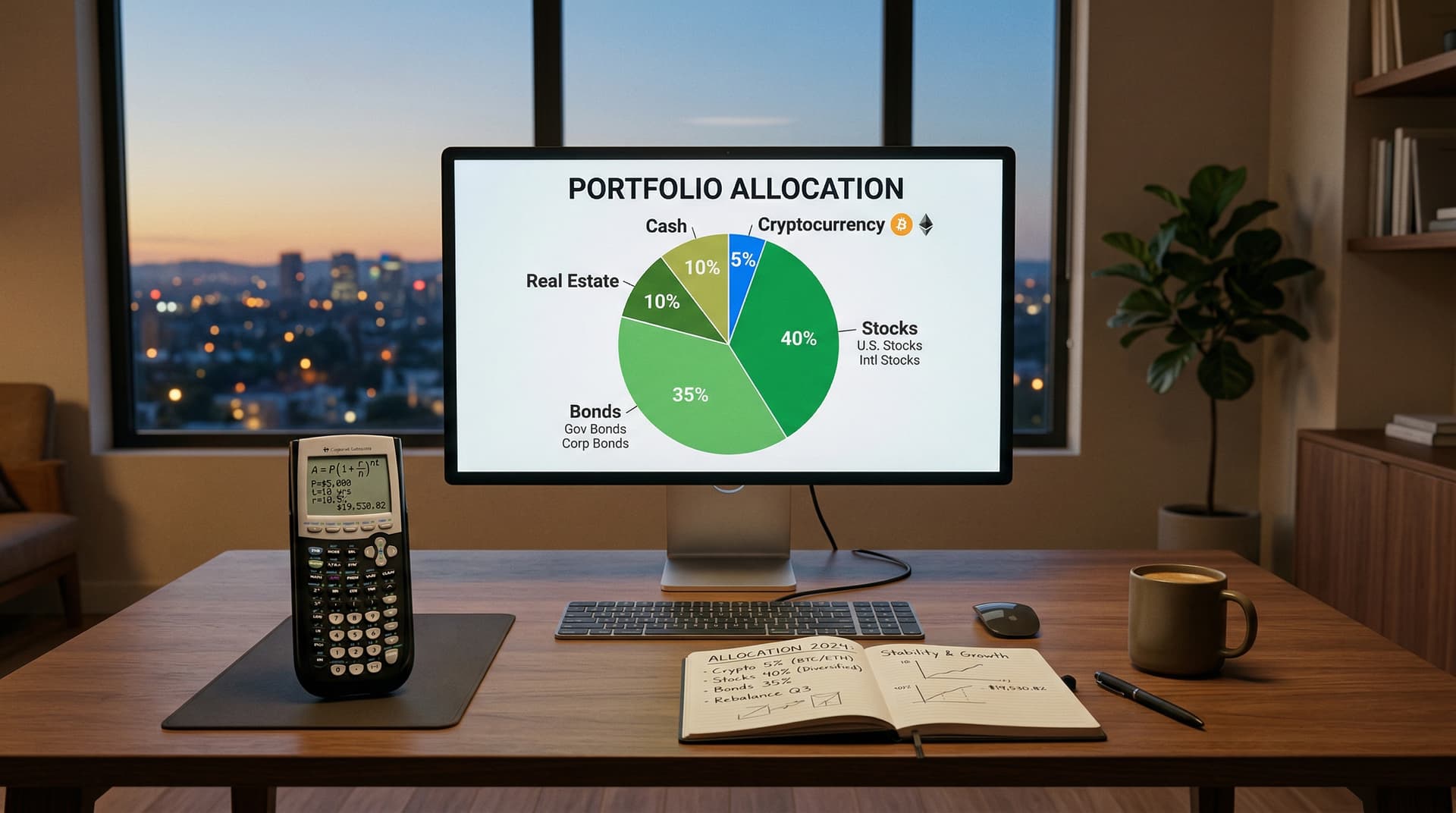
Crypto portfolio allocation demands caution with Fear & Greed Index at 16. Bitcoin dropped 3.6% to $70,882 USD (CoinMarketCap, April 12, 2026). Ethereum fell 4.8% to $2,194.36 USD.
Market Fear Sparks Smart Buying Opportunities
Panic drives sales of strong assets. History proves recoveries follow. Alternative.me's index fell below 20 several times in past cycles. Bitcoin always bounced back with force.
CoinMetrics reports Bitcoin's 10-year average annual returns top 200%. Volatility stays at 50-70% annualized (CoinMetrics, Q1 2026).
Dollar-cost average into this dip. Commit small weekly sums. This method cuts your average entry price over time.
I lived through 2022's crash. My 15% crypto position plunged 80%. I held firm instead of panic-selling. By 2025, markets rocketed 300% higher. That lesson stuck: discipline beats emotion.
Why Conventional Advice Misses the Mark
Some gurus push 20-50% crypto allocations during bull runs. They ignore 80%+ drawdowns. Stocks and real estate offer more reliable growth.
The Federal Reserve's 2024 Survey of Consumer Finances shows U.S. household net worth grows 6% annually on average.
Tailor your crypto portfolio allocation to 1-10% based on age and risk tolerance. Younger folks target the higher end. Investors over 50 cap at under 5%.
Set your personal limit based on the maximum drawdown that would scare you most during crashes.
Simple Formula for Strategic Crypto Allocation
Begin with your total investable assets. Deduct a six-month emergency fund first. Gauge your risk capacity.
Allocation % = (110 - Age) × Risk Score / 100
The age factor subtracts your age from 110. Pull your risk score (1-10) from Vanguard's investor questionnaire.
Take a 35-year-old with a $100,000 portfolio and risk score of 7. Allocation = (110 - 35) × 7 / 100 = 5.25%. That means $5,250 USD in crypto.
Rebalance every quarter. Review annually for life changes.
Portfolio Examples Tailored by Income
The U.S. median salary hit $62,000 USD in 2025 (Bureau of Labor Statistics, 2025 data). A 10% savings rate generates $500 monthly to invest.
Low income ($50k/year): Build a $20k portfolio. Allocate 3% or $600 USD. Split evenly: $300 BTC, $300 ETH.
Mid income ($100k): Grow to $100k portfolio. 5% equals $5,000 USD. Divide 60% BTC, 30% ETH, 10% USDT ($1.00 stablecoin).
High income ($200k+): Manage a $250k portfolio. 8% targets $20,000 USD. Include BNB ($593.44) or XRP ($1.33) for diversification.
All prices from CoinMarketCap (April 12, 2026).
| Income | Portfolio | Crypto % | Amount USD | |----------|-----------|----------|------------| | $50k | $20k | 3% | $600 | | $100k | $100k | 5% | $5,000 | | $200k+ | $250k | 8% | $20,000 |
Project Your Compound Growth
Invest $5,000 in that 1-10% slice. Bitwise's historical analysis projects 15% annual net returns post-fees (Bitwise Crypto Index Report, 2025).
Future value formula: $5,000 × (1.15)^10 = $20,227 USD in 10 years. Compare to traditional portfolios at 7% annual growth.
Blockchain innovations drive this edge. Ethereum's upgrades and Layer-2 networks cut fees by 90% since 2024 (Ethereum Foundation, 2026).
A small crypto stake boosts total portfolio returns 1-2% above the S&P 500's 10% historical average. It adds punch without overwhelming risk.
Build your own model in Google Sheets. Pull live data from CoinGecko APIs for real-time tracking.
Essential Risk Management Tactics
Set stop-losses at 20% below entry prices. Never use borrowed money or margin. Store assets in hardware wallets like Ledger.
Diversify smartly: 50-70% Bitcoin as the anchor, Ethereum for smart contracts, 10-20% altcoins such as XRP.
Track taxes diligently. The IRS treats crypto as property (IRS Notice 2014-21). Tools like Koinly calculate your cost basis accurately.
During extreme fear, rotate 20% into USDT. Wait for the Greed Index to exceed 50 before re-entering.
Reflect on whether fear or greed drove your last trade. Build rules to stay objective next time.
Tech Innovations Power Crypto's Future
Crypto integrates deeply with traditional finance. BlackRock holds $10 billion in Bitcoin ETFs (SEC filings, Q1 2026). Major banks now offer custody services.
DeFi platforms deliver 5-10% yields on stablecoins, outpacing FDIC-insured savings at 4.5% APY (DefiLlama, April 2026).
Quantum-resistant blockchains protect against future threats, ensuring long-term security.
Your Weekly Action Plan
1. Audit your current portfolio. Sell down crypto above 10%.
2. Open or fund accounts at Fidelity, Coinbase, or similar.
3. Set up automated buys: $50-100 weekly in 60/40 BTC/ETH split.
4. Check Fear & Greed daily at Alternative.me. Buy aggressively below 30.
5. Review progress in 30 days. Journal what worked and adjust.
This disciplined crypto portfolio allocation strategy builds real wealth. Embrace the fear, follow the plan, and watch your financial wellness grow.