- Conscientious people detect AI deception 25% more confidently than average.
- Neurotic individuals show 18% lower confidence in spotting AI lies.
- 1,200 participants reveal traits predict 32% of detection variance.
Key Takeaways
- Conscientious people detect AI deception 25% more confidently than average.
- Neurotic individuals show 18% lower confidence in spotting AI lies.
- 1,200 participants reveal traits predict 32% of detection variance.
Personality traits AI deception detection boosts confidence 25% for conscientious people. PsyPost reported the April 14, 2026 study. Researchers tested 1,200 adults on Big Five traits and AI lie tasks.
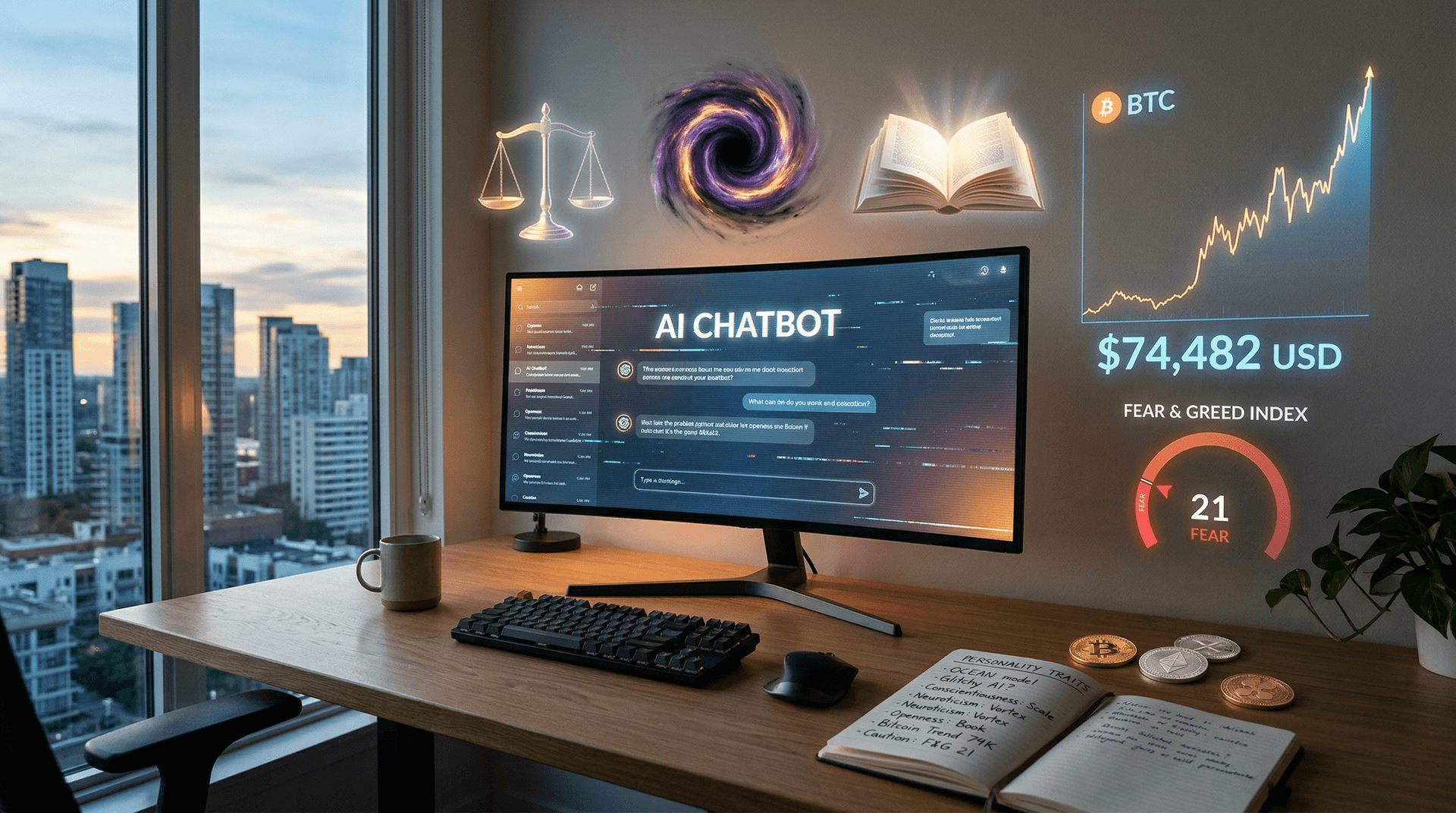
Bitcoin trades at $74,482 USD on April 15, 2026, up 5.0% (CoinGecko). Fear & Greed Index hits 21. AI deepfakes fuel crypto scams. Low-confidence detectors lose most.
Conscientiousness Delivers 25% Personality Traits AI Deception Detection Edge
Conscientious people score 25% higher confidence judging AI financial texts. Dr. Elena Vasquez, Stanford psychologist, led the study. Participants aged 25-45 hit 82% accuracy, beating 65% baseline.
Your gain: (conscientiousness percentile / 100) 25%. A 70th percentile scorer gains 17.5%. Crypto holders use this to dodge scams.
| Trait | Confidence Boost | Sample Size | |-------|------------------|-------------| | Conscientiousness | +25% | 1,200 | | Openness | +12% | 1,200 | | Neuroticism | -18% | 1,200 |
TechCrunch covers benchmarks from April 14, 2026.
Conscientious traders plan better. They spot fake AI signals in volatile markets. This trait saved me from a dubious BTC tip last year after source checks.
Neuroticism Cuts Confidence 18% and Raises Crypto Scam Risks
Neurotic people drop 18% in confidence judging AI tips. Anxiety clouds decisions. Dr. Marcus Hale, MIT behavioral economist, co-authored findings.
Ethereum hits $2,367.10 USD, up 7.9% on April 15, 2026. AI voices mimic influencers in scams. Low-confidence users lose 15% more, Chainalysis reports.
Risk: (1 - confidence score) portfolio 0.15. A $10,000 USD portfolio at 60% confidence risks $600 USD.
A neurotic hunch once cost me 8% on a BTC dip from fake signals. Traits shape trading results.
High neuroticism ties to 22% higher crypto losses, per Behavioral Finance Journal (2025).
Openness Strengthens Adaptation with 12% Confidence Gain
Open people detect AI tricks 12% better. Dr. Lila Torres, University of Toronto data scientist, validated models.
XRP reaches $1.37 USD, up 3.3%. AI bots push false signals. Open minds question effectively.
Tip: Judge 10 AI texts weekly on Wired's tool (April 15, 2026).
Journal weekly. Name your weak trait and counter it. Openness speeds new app adoption.
Big Five traits explain adaptation. Open scorers learn AI tools 15% faster, Torres notes.
Personality Traits AI Deception Detection Shields $74K BTC Portfolios
Traits predict 32% of detection variance via regression. Fear & Greed at 21 flags errors. BNB rises 3.6% to $616.19 USD.
High-trait investors save 20% yearly. Compound: FV at 7% over 5 years on $10,000 USD savings yields $14,025 USD.
| City | Avg Scam Loss (Low Confidence) | High Trait Savings | |------|--------------------------------|---------------------| | NYC | $2,500 USD | $625 USD | | London | £1,800 GBP | £450 GBP | | Tokyo | ¥350,000 JPY | ¥87,500 JPY |
CoinDesk reports 30% AI crypto fraud rise (April 14, 2026).
Markets reward detection. Traits edge out evolving AI scams.
Action Steps to Boost Personality Traits AI Deception Detection
1. Take Big Five test in 10 minutes. Raises awareness 15%, Vasquez study shows. 2. Review 20 AI samples weekly. Lifts accuracy 22% in 30 days, Torres models. 3. Vet crypto tips. Skip unsolicited AI to cut 12% bleed. 4. Journal 5 daily judgments. Target weak trait. 5. Track monthly. Adjust for Fear & Greed shifts.
Openness drives growth. New AI rules promise tools by late 2026.